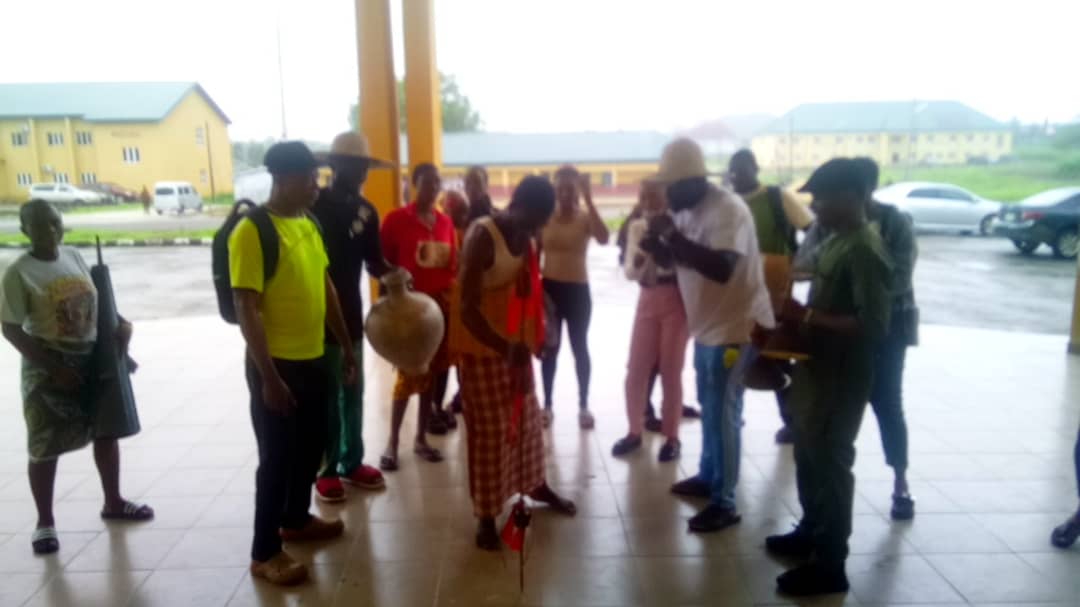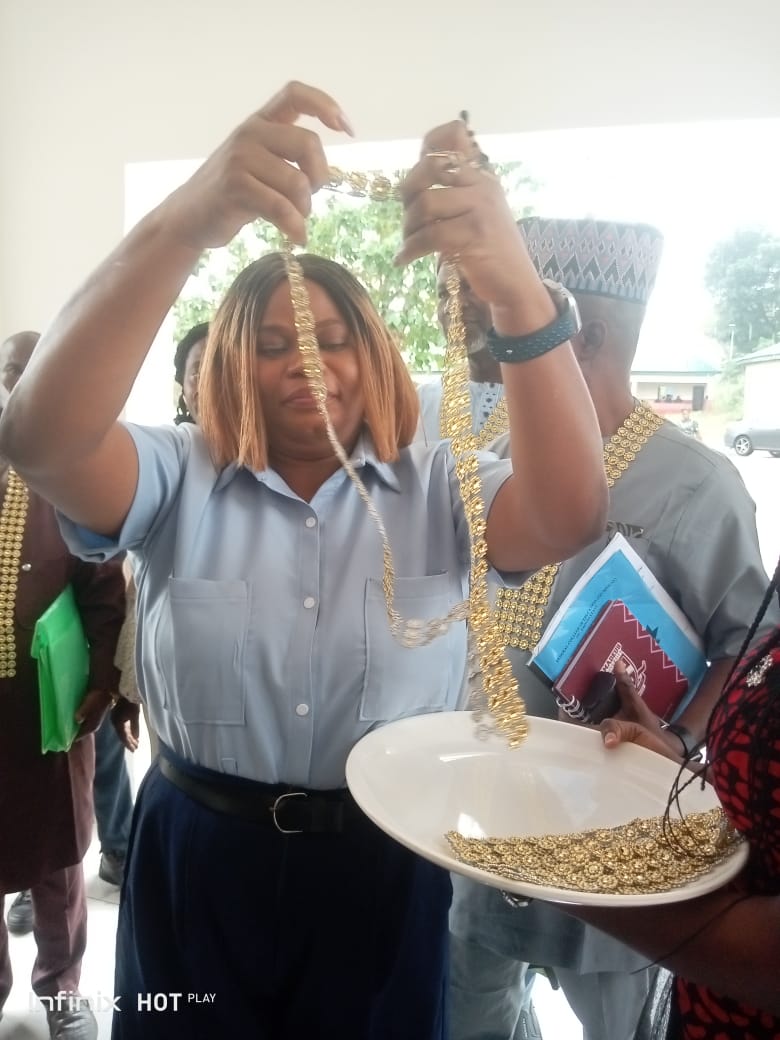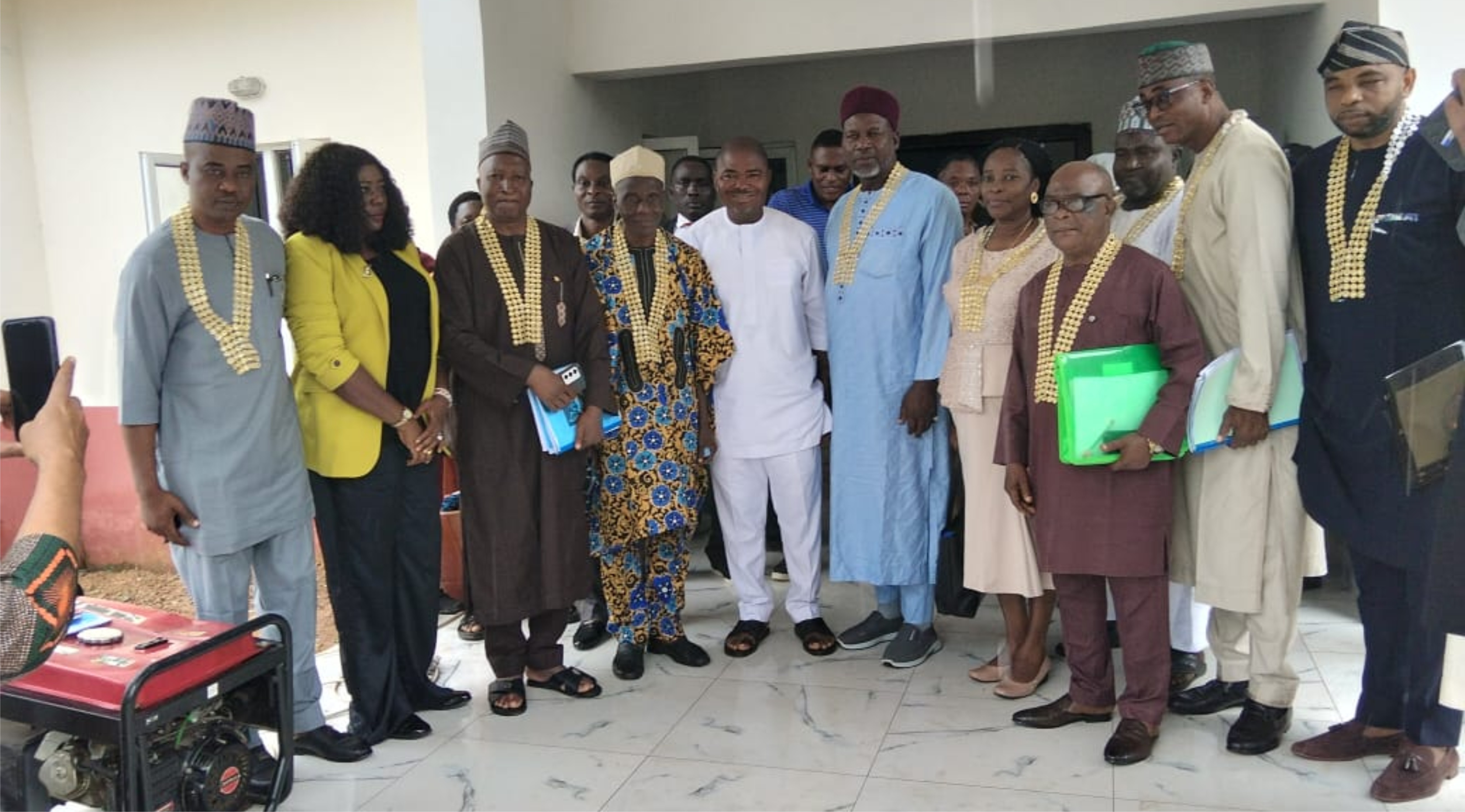
The exercise provided an opportunity for the College to evaluate its level of preparedness in terms of physical facilities, academic manpower, equipment, documentation, curriculum implementation and institutional infrastructure required for the successful commencement of degree programmes under the Dual Mandate Policy.
The NUC team, comprising seasoned academics and resource verification experts ably lead by Mr Jude Akubue, visited various academic units, workshops, laboratories, classrooms, offices, and support facilities across the institution.
LIBRARY ASSESSMENT
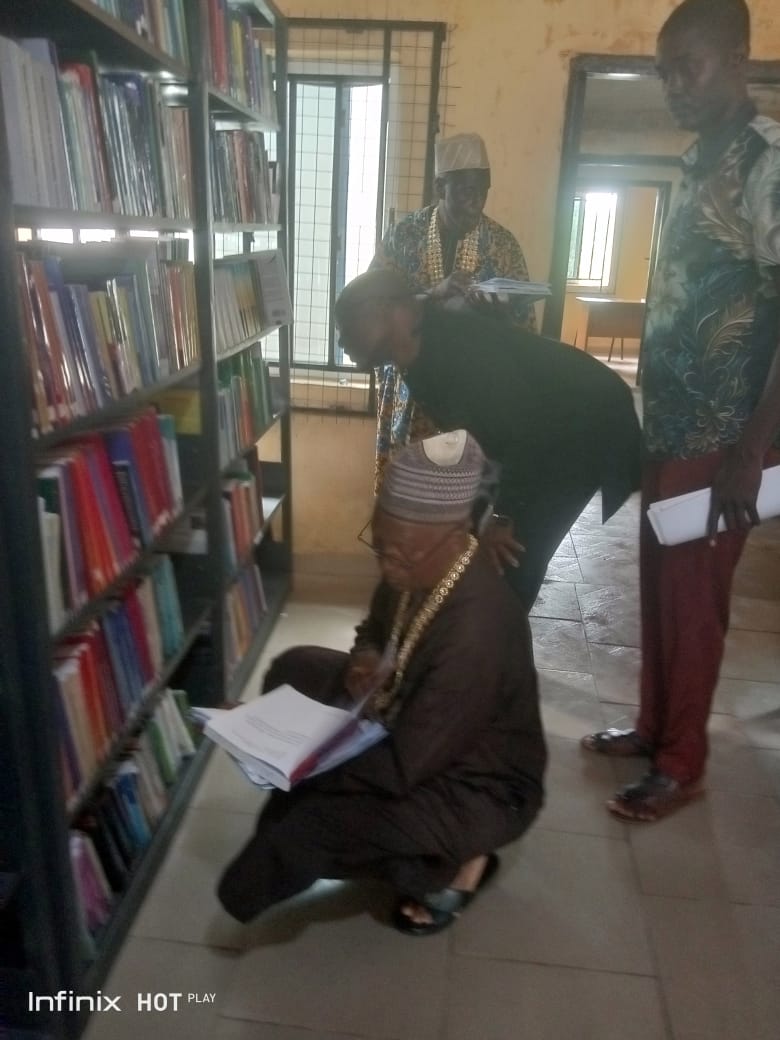
The verification team commenced its inspection at the College Library, where they were received by the College Librarian, Dr. Ejike Udensi Igwebuike.
The Librarian presented the available resources, including the e-library facilities and the 140-capacity library complex, while also informing the team that a new library complex is currently under construction.
During the inspection, the team assessed the library building, internet facilities, electronic databases, journals, subject-specific resource materials, lighting and ventilation systems. The librarians successfully demonstrated the functionality of the available systems.
The team commended the efforts of the institution but recommended further improvement in the lighting and ventilation systems to enhance the learning environment.
INSPECTION OF VOCATIONAL AND TECHNICAL EDUCATION FACILITIES
The NUC team proceeded to inspect the workshops and facilities within the School of Vocational Education.
At the Automobile Technology Workshop, the team observed students practically assembling a V4 engine and inspected the available equipment. The team recommended proper labeling of all machines and equipment.
The Building Technology Workshop was also inspected, and the team expressed satisfaction with the facilities available.
At the Metalwork Technology Workshop, the inspectors examined the available equipment and interacted with the technical staff.
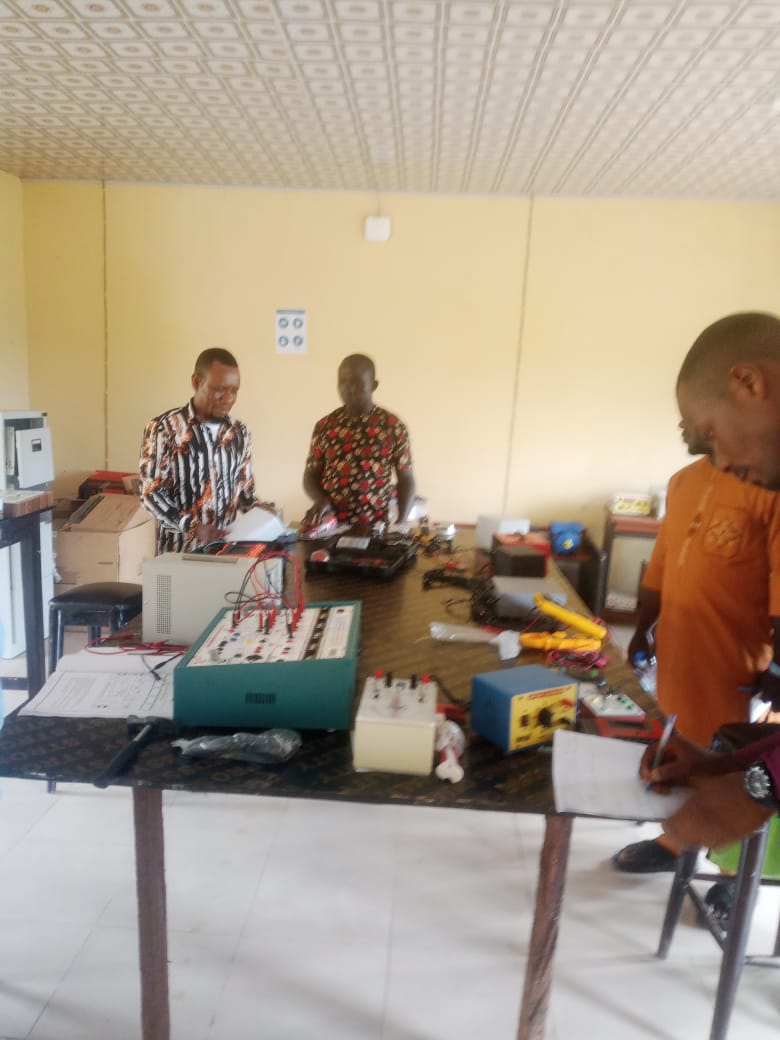
The team further visited the Electrical and Electronic Technology Workshop, where the technologist, Mr. Ndifreke, satisfactorily demonstrated knowledge of the equipment available in the workshop. The team recommended that the workshop should also serve as a practical learning environment for students.
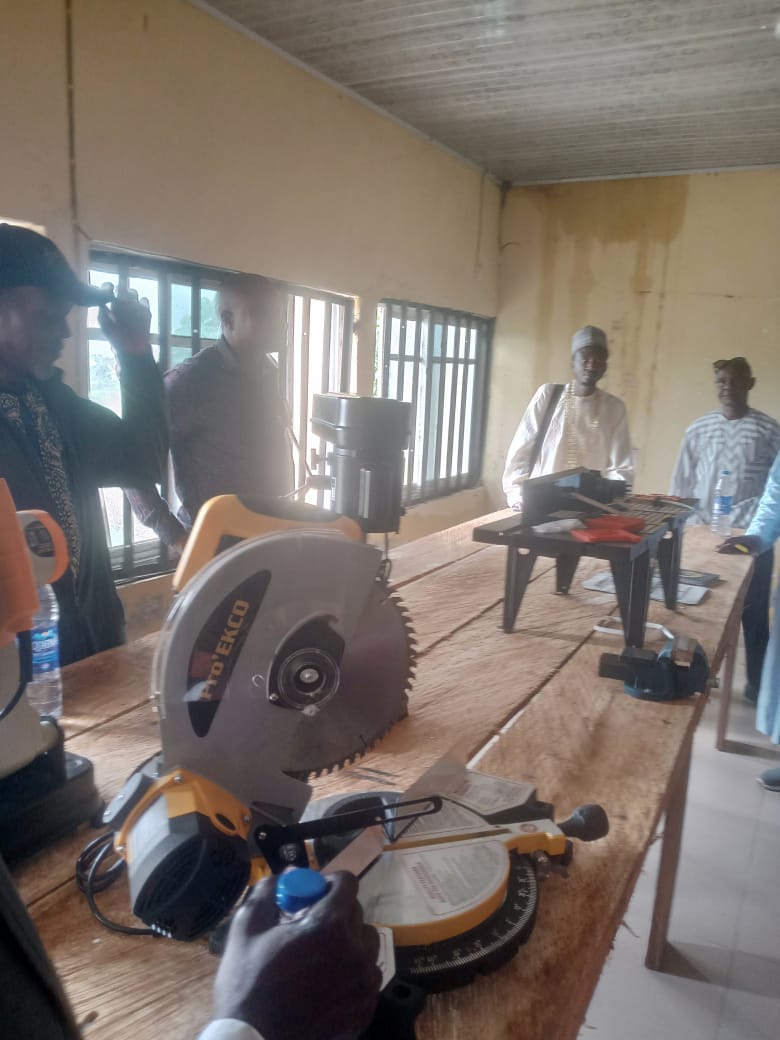
At the Woodwork Technology Workshop, the inspectors assessed the machines and noted that noise and vibration generated by the equipment could constitute distractions to nearby users. Consequently, they recommended that such workshops should be appropriately located to minimize disruption to academic activities.
INSPECTION OF SCIENCE EDUCATION FACILITIES
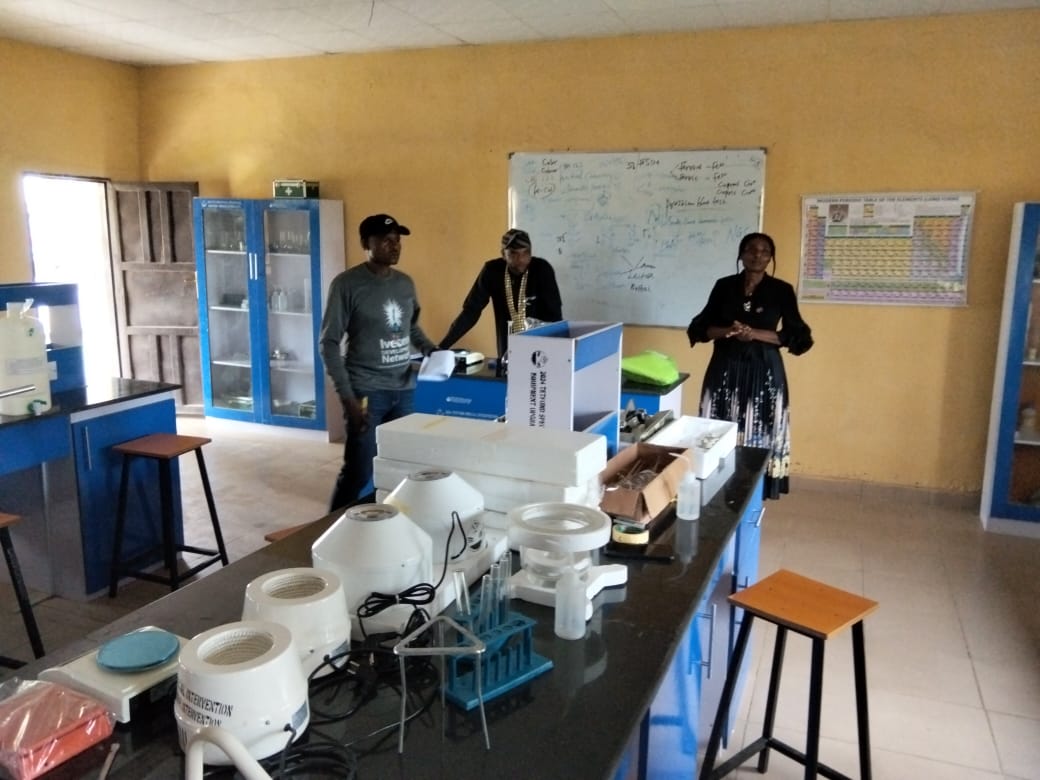
The team also conducted an extensive inspection of facilities within the School of Science Education, covering the Departments of Mathematics, Biology, Chemistry, Physics, Integrated Science, Health and Physical Education.
The inspectors acknowledged the significant improvements made by the College Management in repositioning the School for the Dual Mandate Programme. However, they emphasized the need for additional facilities and equipment to meet NUC standards.
Among the recommendations made were:
- Adequate provision of laboratory equipment, specimens, simulation tools and testing apparatus.
- Expansion of laboratory and classroom capacities to accommodate students comfortably.
- Provision of a standard training gymnasium for the Department of Physical Education.
- Strengthening internet facilities to support teaching, learning and research activities.
- Continuous recruitment of qualified academic staff where necessary.
The team further emphasized that the Dual Mandate Programme is a collaborative initiative of the National Universities Commission (NUC) and the National Commission for Colleges of Education (NCCE), designed to expand access to degree-level teacher education and strengthen enrolment in Colleges of Education.
ICT UNIT ASSESSMENT
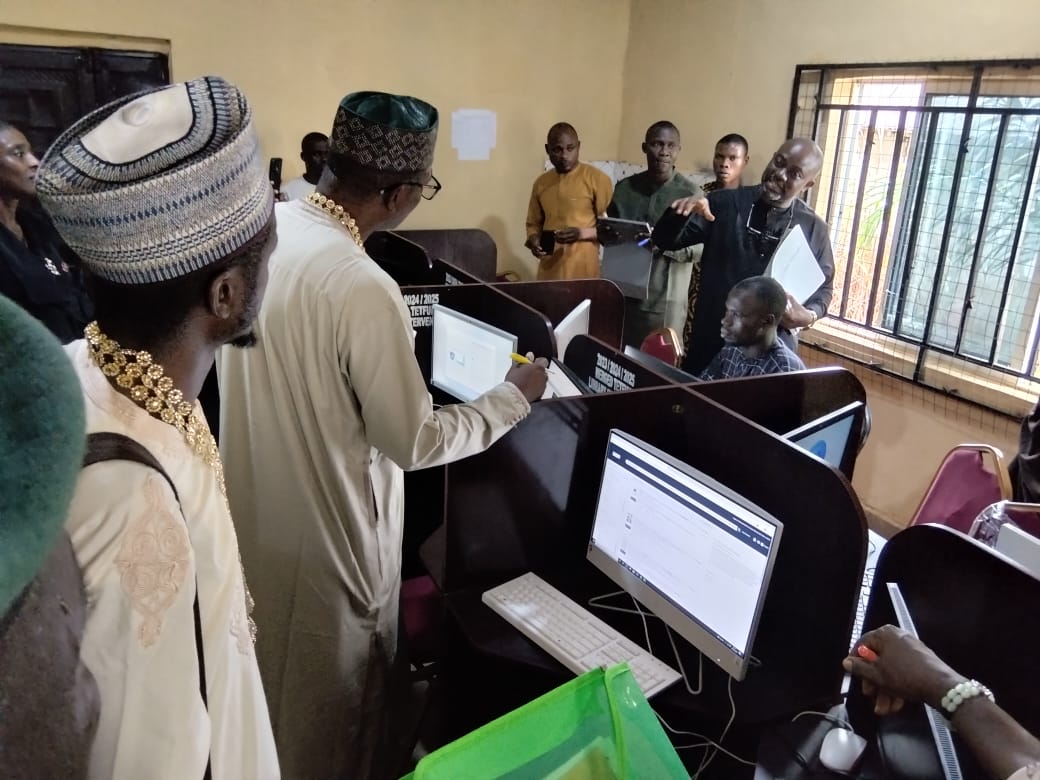
The verification team visited the ICT Unit, where they were received by the Acting Director, Mr. Francis Chijioke Olung.
The Acting Director informed the team that the College operates a 24-hour internet service supported partly by solar energy. He further disclosed that the ICT/Multimedia Centre houses 30 functional computers available for academic activities and research.
The team inspected the facilities and expressed satisfaction with the progress recorded by the College in ICT development, particularly the installation of software and programmes necessary for the implementation of the Dual Mandate Policy.
INSPECTION OF EDUCATION MANAGEMENT AND RELATED DEPARTMENTS
The team also visited the School of Education Management and conducted assessments of the Departments of Early Childhood Education, Special Needs Education, Social Studies, Political Science, and Economics/Economic Development.
During the exercise, the team identified several areas requiring attention, including:
- Inadequate office accommodation and excessive sharing of offices.
- Insufficient classroom spaces in some departments.
- Need for additional qualified academic staff.
- Inadequate practical facilities and resource centres.
- Insufficient teaching and learning materials.
- Need for improved staff documentation and record keeping.
- Inadequate library resources in some subject areas.
- Need for additional workshops, laboratories and demonstration facilities.
Specifically, the team recommended the establishment of a nursery and crèche for Early Childhood Education practical training, provision of specialized laboratories for Special Needs Education, and improved workshop facilities for Social Studies and other related departments.
STAFF DOCUMENTATION AND ADMINISTRATIVE RECORDS
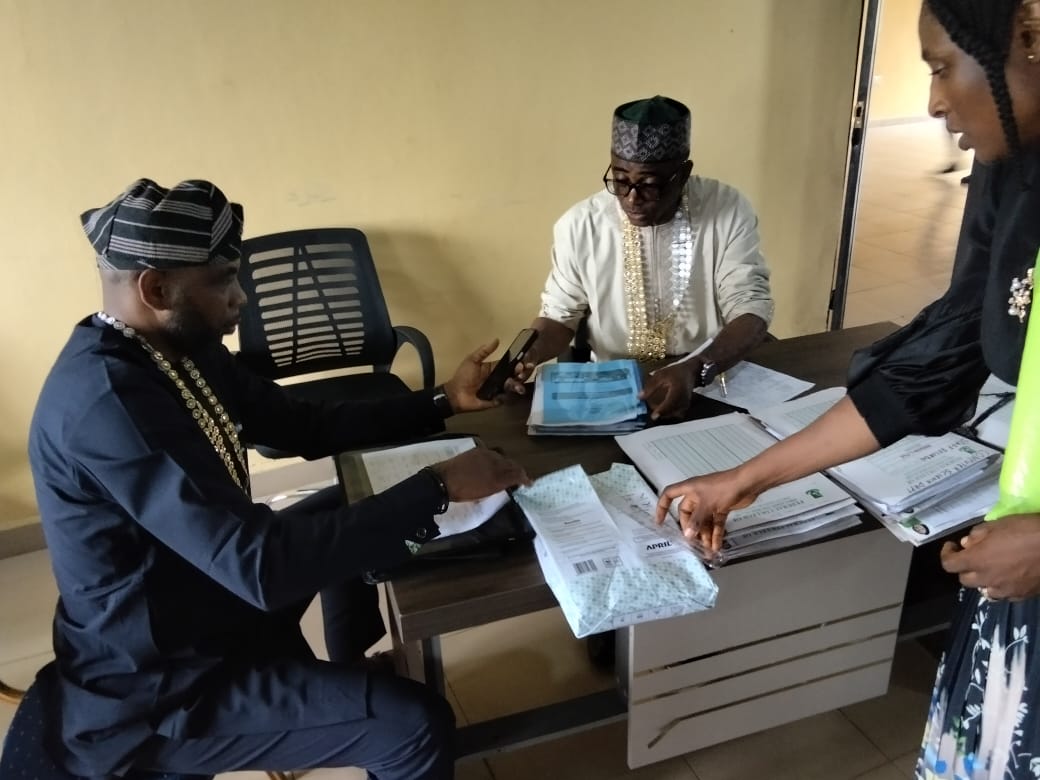
A major aspect of the verification exercise focused on staff documentation and personnel records.
The team stressed the importance of maintaining comprehensive staff files containing:
- Letters of appointment and acceptance.
- Curriculum Vitae.
- Promotion records.
- Conference attendance certificates.
- NYSC certificates.
- TRCN certificates where applicable.
- Membership certificates of relevant professional bodies.
- Other relevant official documents.
The inspectors noted that proper documentation contributes significantly to accreditation scores and therefore advised departments to update all personnel records before the accreditation exercise.
The team further recommended that Heads of Department should have separate offices to ensure confidentiality and effective administration.
CURRICULUM, SELF-STUDY DOCUMENTS AND ACADEMIC REQUIREMENTS
The NUC team emphasized the importance of departmental Self-Study Documents and advised that each department should clearly articulate:
- Vision and Mission Statements.
- Philosophy, aims and objectives.
- Admission requirements.
- Course outlines and curriculum structure.
- Graduation requirements.
- Unique departmental features.
- Departmental rules and regulations.
- Academic and administrative procedures.
The team reiterated that academic programmes must align with the approved Dual Mandate curriculum and comply with all relevant NUC and NCCE guidelines.
CLASSROOM FACILITIES
The inspectors also assessed classroom facilities across the institution and made the following observations:
- Some classrooms in require better arrangement and organization.
- Damaged seats should be repaired or replaced.
- Lighting systems require improvement in some locations.
- Whiteboards should be properly mounted to improve visibility during lectures.
- Additional classrooms should be provided where necessary to reduce overcrowding.
GENERAL OBSERVATIONS
At the end of the exercise, the NUC team acknowledged the significant efforts of the College Management towards repositioning the institution for the successful implementation of the Dual Mandate Programme.
The team noted visible progress in infrastructure development, ICT enhancement, academic planning and resource provision. However, they emphasized the need for continued improvement in staffing, facilities, equipment provision, documentation, laboratory development, workshop expansion and classroom accommodation.
The exercise was both informative and beneficial, providing the College with valuable insights into areas of strength and aspects requiring further attention ahead of the full accreditation exercise.
The observations and recommendations arising from the verification exercise are expected to guide Management in strengthening institutional capacity and ensuring that all academic programmes meet the standards required for the successful implementation of the Dual Mandate Programme at the Federal College of Education (Technical), Isu, Ebonyi State.
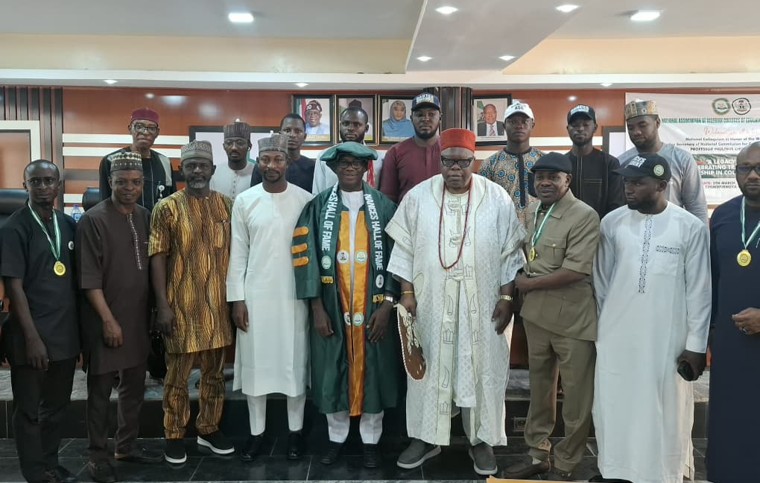
In their closing remarks, the NUC Resource Verification Team commended the Provost, Dr. Francis N. Azunku, and the Management of the Federal College of Education (Technical), Isu, for the remarkable progress recorded in the institution. The team acknowledged the visible improvements in infrastructure, academic facilities, ICT development, and institutional planning, noting that the College has made significant strides towards meeting the requirements of the Dual Mandate Programme. They encouraged the Management to sustain the momentum and address the identified gaps ahead of the accreditation exercise.
Compiled by:
Information and Public Relations Unit
Federal College of Education (Technical), Isu, Ebonyi State